A good morning routine well planned out helps a lot in making school runs go easier and smoother for the whole family. Without one, mornings turn chaotic fast, with alarms getting ignored, shoes going missing, and everyone rushing out the door in a bad mood.
This happens every single term, almost like clockwork, no matter how well the holidays went. A good routine fixes most of this, but it has to be built the right way, not just wished into existence.
This post breaks down exactly how to create a routine that actually holds up. Not just for the first exciting week, but for the whole term ahead.
We’ll cover the small details that most parents overlook, along with the bigger structural changes that make the biggest difference. By the end, you should have a clear, workable plan for your own household.
Before we get into the routine itself, it helps to have the bigger picture sorted first. The Ultimate Back-to-School Guide for Parents covers everything else this season demands, from shopping to emotional prep, and works well alongside this post.
Mornings don’t exist in isolation, after all. They’re shaped by everything that happens the night before, and even the day before that.

How to Build a School Morning Routine That Actually Works
Why Most Morning Routines Fall Apart
Many parents try to build a routine, but it collapses within a few days of starting. Usually, this happens because the routine was too rigid or too complicated to follow under pressure.
A good routine needs to be simple enough that a tired child can follow it half asleep. If it requires too much thinking, it will fail on the mornings you need it most.
Another common mistake is building the routine around adults instead of around the child. A routine that only works when a parent is fully alert and organized will break down fast.
The goal is a system that runs almost on its own, even on your worst, most exhausted mornings.
Some parents also make the mistake of copying someone else’s routine exactly, without adjusting it.
What works for one household might not fit another family’s pace or personality at all.
A routine has to be built around your specific child, not around a generic checklist found online.
If your child still feels nervous about the term starting at all, that emotional piece matters here too.
How to Prepare Your Child for the First Day of School Without Stress covers how to ease that fear before the first morning even arrives.
A nervous child often moves slower in the morning, not out of stubbornness, but out of quiet dread.

Recognize The Signs Of A Broken Routine
Before fixing anything, it helps to notice where exactly things are falling apart currently.
Is the struggle at wake-up time, or later during breakfast and dressing? Does the chaos happen every day, or only on certain mornings of the week?
Identifying the specific weak point makes it much easier to target a real fix.
Write down, even mentally, what usually goes wrong on a typical school morning. This small audit gives you a clearer starting point than trying to fix everything at once.

Start The Night Before, Not The Morning Of
The single biggest shift that fixes most morning chaos happens the night before, not the morning itself. Whatever can be done before bed should never be left for the rushed morning window.
This includes laying out clothes, packing bags, and preparing lunch items wherever possible.
Sit down as a family the night before and go through what tomorrow actually needs. Let your child pick their outfit, so there’s no last-minute searching through messy drawers.
Pack the school bag together, checking books, homework, and any signed forms needed for the day ahead.
This nightly habit takes maybe ten minutes, but it saves far more time the next morning. It also removes a huge chunk of the mental load that usually falls on parents alone.
Once this becomes a habit, mornings feel noticeably lighter almost immediately.
If your child’s bag still needs sorting out properly, this is worth doing early in the term.
How to Choose the Right Backpack for Your Child helps you pick one that makes packing and carrying easier every single morning.

Prep Lunch The Night Before Too
Lunch preparation is one task that often gets left for a rushed morning moment, and it shouldn’t be. Move as much of it as possible to the night before instead of the morning rush.
Wash containers, prepare simple items, and only assemble what truly needs freshness right before leaving.
This alone can save ten or fifteen minutes of morning stress every single day of the term.
For ideas on lunches that don’t just save time but also actually get eaten, How to Pack School Lunches Kids Will Actually Finish has practical suggestions worth trying out this week.

Set Out Shoes And Accessories Too
It’s easy to forget smaller items like socks, hair accessories, or a water bottle until the last minute.
Add these small items to your nightly checklist alongside clothes and bags. Missing a single small item can derail an otherwise smooth morning surprisingly fast.
Keep a small basket or tray specifically for these last-minute items each night. This way, nothing gets left behind simply because it wasn’t part of the main routine.

Set A Wake-Up Time And Protect It
Pick a wake-up time that gives your child enough time without feeling rushed or hurried. Avoid the temptation to squeeze in extra sleep by pushing wake-up later and later each week.
A rushed morning creates stress that follows your child straight into their classroom.
Once you settle on a time, protect it fiercely, even on days everyone feels tired or reluctant. Consistency matters more than the exact number you choose for your household.
A body that wakes up at the same time daily eventually does so with less resistance over time.
If waking up itself feels like a daily battle, consider adjusting bedtime instead of the alarm clock.
Most morning struggles actually trace back to a bedtime that’s simply too late for enough real rest.

Use Natural Light To Help Wake-Up Feel Easier
Opening curtains immediately after waking can help a sleepy child feel alert faster than expected. Natural light signals the body that it’s genuinely time to start the day.
This small trick works especially well during darker mornings later in the school term.
Avoid turning on bright overhead lights immediately, which can feel harsh and jarring first thing.
Natural light tends to feel gentler while still doing the job of waking the body properly.

Build A Simple, Repeatable Sequence
Kids do best with a routine that follows the same order every single day without much variation.
Wake up, use the bathroom, get dressed, eat breakfast, brush teeth, then grab the bag. The exact order matters less than having one at all, and sticking to it daily without fail.
Write this sequence down somewhere visible, like a simple chart on the fridge or bedroom door.
Younger kids especially benefit from pictures next to each step, since reading takes extra time under pressure.
This visual reminder means you don’t have to repeat instructions every single morning out loud.
Once your child learns the sequence, resist the urge to over-manage each step yourself constantly. Step back and let them follow the chart, only stepping in when truly needed.
This builds independence, which in turn makes mornings faster over time, not slower or more stressful.

Use A Visual Timer For Younger Kids
Young children often struggle to understand abstract concepts like “we have ten minutes left.” A visual timer, where time visibly counts down, makes this much easier to grasp.
Kids can see time passing instead of just hearing a number that means little to them.
This small tool reduces the need for constant verbal reminders during a busy morning. It also gives your child a sense of control over their own pace throughout the routine.

Give Yourself More Time Than You Think You Need
Many parents underestimate how long mornings genuinely take, especially with young kids involved in the process.
Build in extra buffer time beyond what feels strictly necessary on paper or in theory. This cushion absorbs the small delays that happen almost every single morning without fail.
A spilled cup, a missing sock, or a sudden mood swing can each eat up several minutes easily. Without buffer time, these small hiccups snowball into a stressful, late departure every single time.
With buffer time built in, the same hiccups barely register as a real problem at all.
Try adding at least fifteen extra minutes to whatever timeframe feels comfortable on paper. This buffer rarely goes to waste, even on the smoothest of mornings.

Keep Breakfast Simple And Consistent
Breakfast doesn’t need to be elaborate to be effective every single school morning. In fact, simple and consistent options often work better than trying something new and different daily.
Pick two or three easy breakfast options and rotate between them through the entire week.
This removes decision fatigue for both you and your child first thing in the morning hours. It also means you can prep certain elements ahead of time, saving precious minutes daily.
A calm, fed child starts the school day in a much better mood overall, and it shows.

Involve Your Child In Choosing Breakfast Options
Let your child pick between two pre-approved breakfast choices each night before bed. This small act of choice reduces morning arguments about what to eat significantly.
It also speeds up the actual breakfast process since the decision is already made in advance.
Avoid offering too many options though, since too much choice can slow things down instead of helping.
Two or three simple choices is usually the sweet spot for most households.

Reduce Decisions In The Morning
Every decision your child makes in the morning uses up mental energy they’ll need later in the day. Reduce the number of choices available during this window as much as realistically possible.
Fewer options mean faster mornings and fewer opportunities for arguments or meltdowns to occur.
This is exactly why choosing clothes and lunch the night before works so well for most families. It removes decisions from a time when patience is already thin for everyone involved in the process.
Save decision-making for calmer moments, like the evening, when everyone has more patience to spare.
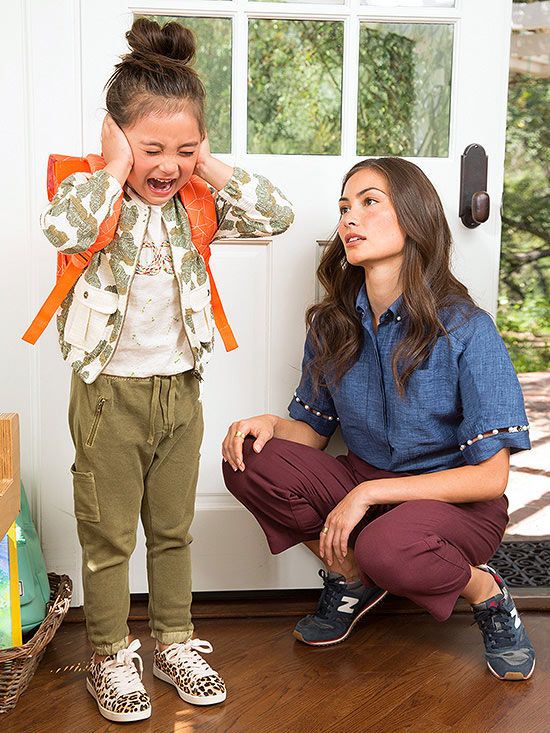
Create A Landing Zone By The Door
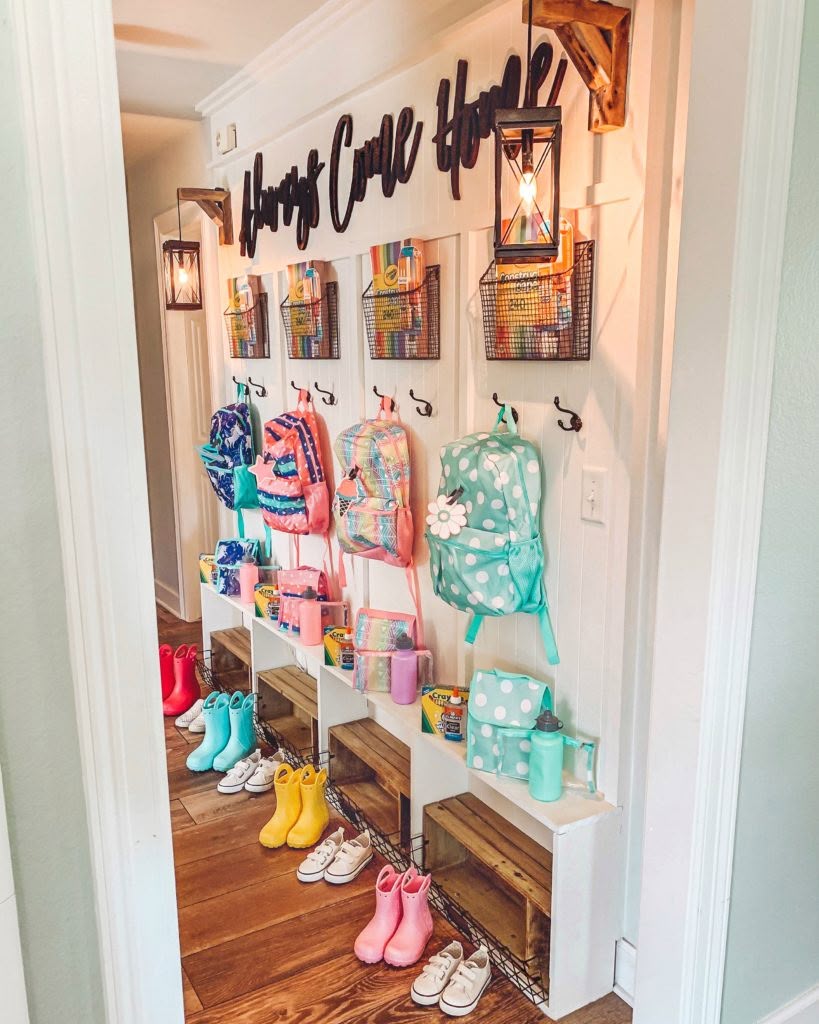
One small change that makes a huge difference is having a designated spot near the exit door. Bags, shoes, and anything needed for school should live in this one spot consistently every day.
This eliminates the frantic search for a missing shoe or forgotten bag five minutes before leaving the house.
Keeping this area organized also ties into the wider effort of organizing your whole home for the term.
Pin this for later: 35 Back-to-School Organization Ideas Every Parent Needs has practical setups that make this kind of system easy to maintain daily throughout the year.
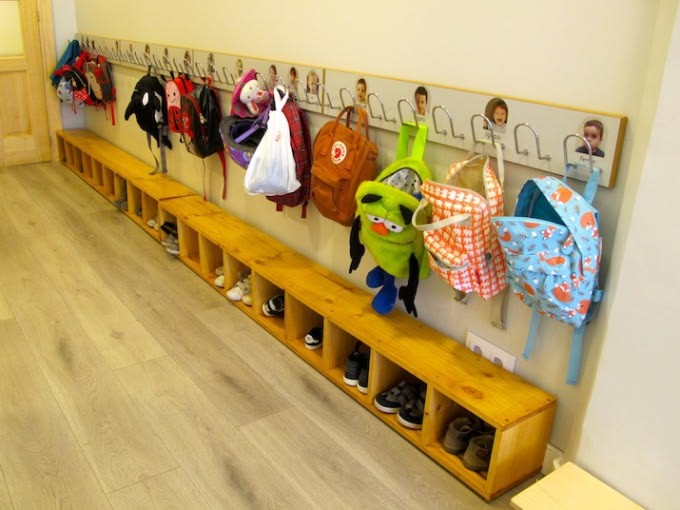
Label Everything In The Landing Zone
If multiple kids share the same space, labels prevent confusion and mixed-up belongings every morning.
A simple hook or basket per child keeps things sorted without requiring constant parental sorting.
This small setup pays off especially during hurried mornings when patience runs short for everyone involved.
Let Kids Take Ownership Of Small Tasks
A morning routine works far better when your child feels like an active participant, not a passenger.
Give them small, age-appropriate responsibilities within the routine itself, based on their age. This might mean packing their own bag, or choosing their own breakfast from two options.
My neighbor built this into her household by giving her daughter a simple morning checklist to follow daily.
Instead of being told what to do at each step, her daughter checked off her own list independently. Within a few weeks, mornings needed far less direction from her mother at all.
The girl took pride in completing her list, and mornings became noticeably calmer at home overall.
Small ownership like this builds confidence and reduces the constant back and forth many parents deal with daily.
Over time, kids often start reminding parents about steps, rather than the other way around entirely.

Handle Slow Mornings Without Losing Your Cool
Even with a solid routine, some mornings will still move slower than others, and that’s expected.
A tired child, a forgotten item, or simple stubbornness can throw off the best-laid plans occasionally.
When this happens, try to stay calm rather than raising your voice or rushing them harshly.
Shouting rarely speeds anything up, and often makes a slow child move even slower out of stress.
Instead, use calm, clear reminders about time remaining, without turning it into a lecture or argument. A steady tone helps your child regulate their own pace better than panic ever truly does.
If mornings consistently feel tense despite your best efforts, it may help to look at the emotional side too.
How to Help Kids Overcome First-Day-of-School Anxiety covers how underlying nerves can quietly show up as slowness or resistance during the morning routine.
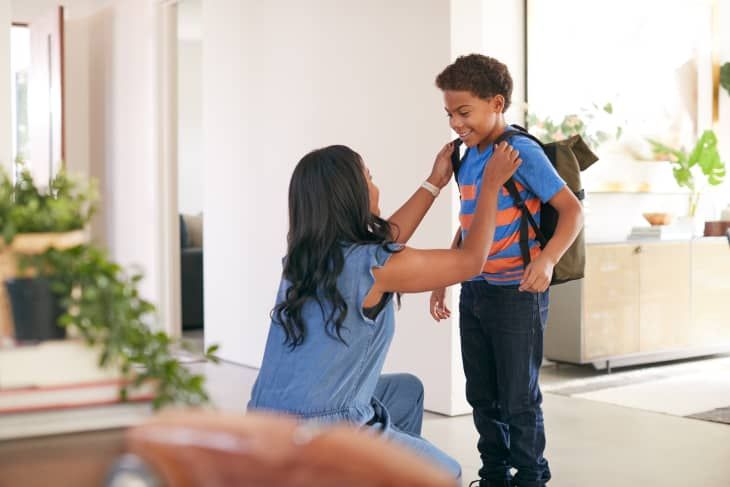
Have A Backup Plan For Truly Bad Mornings
Every household will occasionally hit a morning where nothing goes according to plan at all. Have a simple backup plan for these rare days, like a quick backup breakfast or outfit.
Knowing you have a fallback reduces the panic that usually makes bad mornings feel even worse.
Accept that a handful of rough mornings each term is completely normal and expected. The goal isn’t zero bad mornings, it’s fewer of them over time as the routine settles in.

Adjust The Routine As Your Child Grows
A routine that worked last term might need small tweaks as your child gets older and changes. Younger kids need more visual cues and hands-on help with each individual step.
Older kids can usually handle more independence and fewer reminders from you directly throughout the process.
Revisit the routine every few months and ask your child what feels hard or unnecessary now for them.
Their feedback often reveals small adjustments that make the whole system run smoother overall.
A routine should evolve alongside your child, not stay frozen exactly as it started at the beginning.

Don’t Forget The Emotional Tone Of The Morning
A morning routine isn’t only about tasks getting done in the right order efficiently. It’s also about how your child feels heading out the door each day of the term.
A rushed, tense morning colors the rest of their school day more than most parents realize at first.
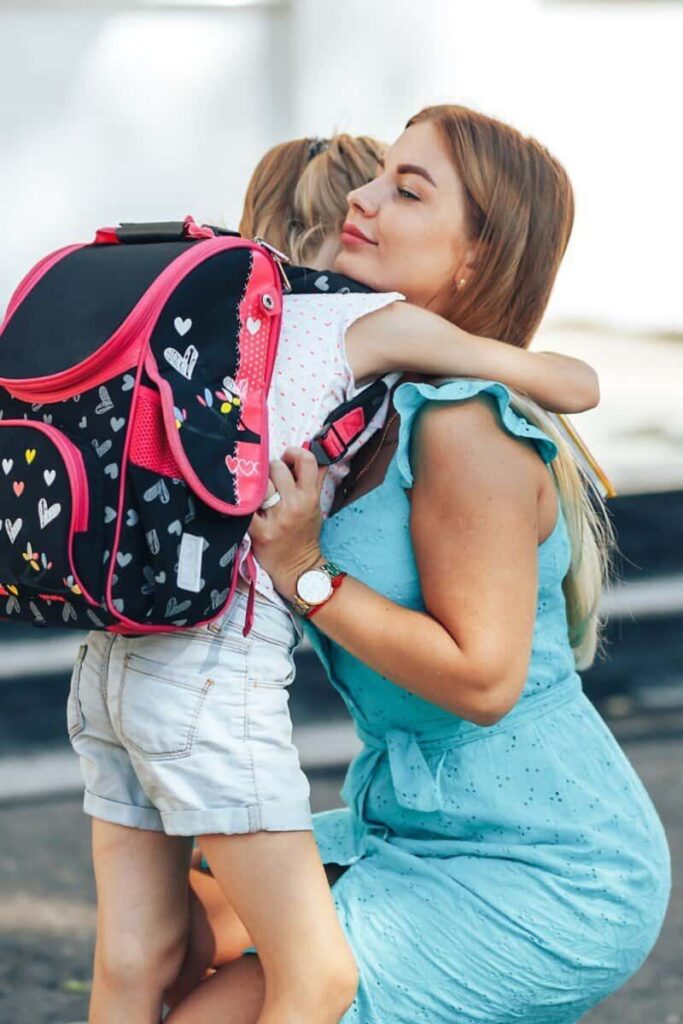
Try to end the morning with something warm, even if it’s brief and simple. A quick hug, a genuine “have a good day,” or a small joke can shift the whole mood instantly.
This small emotional close matters just as much as any checklist or timing plan you’ve built.
What To Do On The Actual First Day
The very first morning of the term deserves a little extra patience, even with a solid routine in place already.
Everyone, including you, is adjusting back into a rhythm that’s been dormant for weeks over the holidays.
Expect a few hiccups, and build in even more buffer time than usual for this particular morning.
If you want that first morning to feel a little special rather than purely functional, 31 First Day of School Photo Ideas You’ll Treasure Forever has simple ways to mark the occasion without adding extra pressure.
photo credit

Keep The Routine Going Beyond The First Week
Many families nail the routine for the first week, then let it slowly fall apart soon afterward.
The real test of a good routine is whether it survives week three or four, not just the opening days of term. Stay consistent even after the initial excitement of a new term wears off completely.
Check in with your child periodically about how mornings feel from their side of things.
If something isn’t working anymore, adjust it rather than forcing the same broken system daily without change.
A flexible, honest approach keeps the routine useful for the entire term, not just the beginning weeks.

Revisit The Routine After School Breaks
Short breaks in the middle of the term can quietly undo weeks of good habits built earlier. After any break, longer than a weekend, expect a short adjustment period before things settle again.
Rebuilding the routine gently after these gaps saves you from starting completely from scratch each time.
What Happens After School Matters Too
While this post focuses mainly on mornings, it’s worth remembering that afternoons shape the next morning too.
A chaotic or overstimulating afternoon often leads to a harder time waking up the following day.
Keep this in mind: 25 Fun After-School Activities That Beat Screen Time has ideas that support better sleep and calmer evenings, which in turn make mornings easier for everyone.
Homework timing also plays into this cycle more than people usually expect it to. If homework drags late into the evening, bedtime slips, and mornings suffer as a direct result.
How to Create a Homework Space That Helps Kids Focus helps homework wrap up faster, protecting the evening routine that feeds into a good morning.

Protect Wind-Down Time Before Bed
The hour before bedtime deserves just as much protection as the morning routine itself.
Avoid stimulating activities or screens too close to lights-out, since they delay real sleep. A calm evening naturally leads into a calmer, easier morning the very next day.

Bringing It All Together
A morning routine that actually works isn’t about rigid perfection or military-style timing at all.
It’s about building a simple, repeatable system that reduces decisions and stress for everyone involved daily.
Start the night before, protect your wake-up time, and give your child small ownership over their own tasks.
Expect some mornings to go wrong anyway, and handle those moments with calm rather than frustration or shouting.
Over time, a good routine becomes automatic, running with less and less effort from you directly each day.
Stick with it through the bumps, adjust when needed, and trust that steady mornings build a steadier term overall for the whole family.
Leave a Reply